

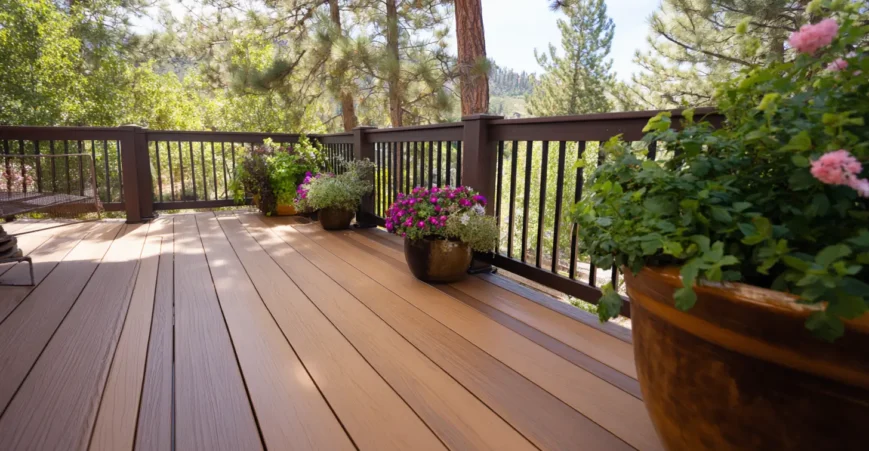
Let me guess, you had a beautiful new timber deck installed? And now youre having to deal with the maintenance that has crept up out of nowhere?
You’ve invested in a beautiful timber decking and now you’re realising it needs more care then you thought it would.
That beautiful new wood looked perfect when it was first installed but now its looking a little sad and dry, a familiar sight for the team at Eco Carpentry, who specialise in bringing tired decks back to life.
The thing is, timber decking maintenance isn’t rocket science but it does need to be done properly and at the right times. Skip it or do it wrong and you’ll be looking at costly repairs or even replacement down the track.
But get it right and your deck can look fantastic for decades.
Why timber decks need regular maintenance
Unlike composite materials, timber is a living material.
That means that is is going to naturally react o its environment around it. In Australia that means expansion and contraction when the temperature changes and also lots of UV damage.
If left untreated timber starts to split crack and warp.
The surface becomes rough and splintery and eventually you get structural issues that mean you have to replace the whole thing. I’ve seen decks that were neglected for just three or four years that needed complete rebuilding.
But here’s the the thing, regular maintenance actually gets easier over time. If you get a routine going then it starts to become an easy process. The first treatment is always the hardest but it gets easier and easier.
When to start your maintenance routine
New timber decks shouldn’t be oiled immediately after installation despite what some builders might tell you.
Fresh timber needs to settle in and weather for anywhere from 6 to 12 weeks depending on the species and local climate conditions and you really shouldn’t rush this process because it makes a huge difference to how well the oil penetrates and how long it lasts which is obviously what you want.
During this weathering period, the timber surface opens up slightly and becomes more receptive to oil penetration.
Rush the process and your oil will sit on the surface rather than soaking in properly, which means it’ll wear off much faster.
Cleaning your timber deck properly
Before any oiling or treatment, you need to get the deck properly clean. And I mean properly clean, not just a quick hose down.
Start with a good sweep to remove loose debris, leaves, and dirt. This stuff can actually stain timber if left sitting, especially when it gets wet and starts decomposing.
For general cleaning, warm soapy water and a stiff brush work well for most situations. Avoid high-pressure cleaners if possible, they can damage the timber surface and drive dirt deeper into the grain.
If you must use a pressure cleaner, keep it on low pressure and maintain a good distance from the timber.
Dealing with stains and marks
Oil stains are probably the most common problem on outdoor decks. If you spill some oil on your fresh new decking then you want to act as fast as you can buy absorbing what you can of it.
Grab paper towels to absorb as much as you can then gently wash with some dish soap and a sponge. Don’t let them just sit on the wood as they will penetrate deeper into it.
Water marks and ring stains from glasses or plant pots usually sand out fairly easily with fine sandpaper.
Mould and mildew can be a problem in humid areas or where the deck doesn’t get much sun.
A solution of water and white vinegar works well for this or you can buy mould removers from places like bunnings. Just make sure to wash after you do the treatment.
Application timing and technique
Your timing is really important when it comes to oiling your deck. You need it to be warm and dry, no exceptions. It simply wont work if your deck is all wet.
And make sure there isn’t water coming within the next 24 hours as it will wash away all your hard work.
Early morning or late afternoon application works best so you can avoid the heat of the day when oils can dry too quickly and not penetrate properly.
Temperature matters too. Most products work best between about 10 to 30 degrees. Too cold and they don’t flow or penetrate well, too hot and they can dry before soaking in.
The timber needs to be completely dry so if its rained the day before of recently then wait another few days until its dry. It affects the penetration of the oil into the wood, making it not worth your time.
Application technique is pretty straightforward but there’s a few tricks that make a big difference.
Work with the grain, not against it. Apply thin, even coats rather than trying to get everything done in one heavy application.
A brush generally gives better penetration than a roller, especially on rougher timber surfaces. Back-brush or wipe any excess oil that hasn’t soaked in after 10-15 minutes, oil sitting on the surface will stay tacky and collect dirt.
Planning ahead
The best way to maintain your deck is to follow a schedule. This way you don’t leave anything until too late. If you only repair when you notice problems, its already too late.
Keep a record of when you’ve done your last treatment.
Stock up on maintenance supplies when they’re on sale this will save you lots when you actually need them and they are full price. Good quality deck oils keep well if stored properly and buying in bulk can save money.
Think about the long term, plan things and choose your maintenance products before hand. Investing in quality oils can also help the treatment last longer.
So yeah, at the end of the day timber deck maintenance is really about being consistent rather than perfect. A deck that gets regular attention will always look better and last longer than one that gets neglected and then heavily restored every few years.
The key is getting into a routine and sticking with it, because your deck will definitely repay the effort with years of beautiful, safe outdoor living space.